You create encounters between strangers that conventional dating would never produce. You build a meeting space, a simple architecture with artistic wonder and intimacy. Two hundred people submit questionnaires online to be matched with another person—not preferences, but truths: What makes you feel most alive? What vulnerability have you never spoken aloud? What kind of presence do you crave? You pair people not on compatibility metrics but matches based on resonance—pairing people whose answers suggest they need to meet each other, even if they’d never swipe right.
You mail each pair identical brass keys with a date, time, and address. No explanation. Just: Bring yourself. Destroy the key when you leave.
Room Zero: The Lobby. A small antechamber with two cushioned benches facing each other, a low table between them holding two sealed envelopes and two cups of tea still steaming. Soft amber light. A sign on the wall reads: You were matched because your truths resonated. Instructions in each envelope are identical: Sit. Drink your tea. When you’re ready, say your name and one thing you haven’t stopped thinking about for the last year. The room gives permission for awkwardness, acknowledges the courage it took to arrive, and offers the first small ritual before the deeper rooms begin.
Room One: The Breathing Chamber. A small circular room with cushions arranged so they sit facing each other, knees almost touching. Dim blue light pulses slowly—four seconds in, four seconds out—and they’re instructed to synchronize their breathing to the light and to each other. No talking. Just breath. After five minutes, their nervous systems begin to entrain, heartbeats slowing to match. They touch hands and feel each other’s palms as a soundscape fills the room creating harmonious lines of musical calm. The body learns intimacy before language can interfere.
Room Two: The Confession Booth. A soundproof room with two microphones and two sets of headphones. They sit side by side, not facing each other, and respond to questions that appear on a screen revealing many dimensions of their personality: What was the moment in your life that made you the most happy? What’s the risk that you are you’re most afraid to take right now? What is the thing you wish people didn’t know about you? What do you want people to know about you more than anything? They listen to each other’s responses through the headphones—the tremor in a laugh, the excitement of a memory, the way someone’s voice drops when they’re telling the truth. Here there’s nowhere left to go but honest.
Room Three: The Mirror Chamber. Floor-to-ceiling mirrors on all sides. They see themselves seeing each other from infinite angles. Nowhere to hide. They’re asked: What do you notice about this person that they might not see in themselves? They write it on the mirror in lipstick. Witnessing becomes gift.
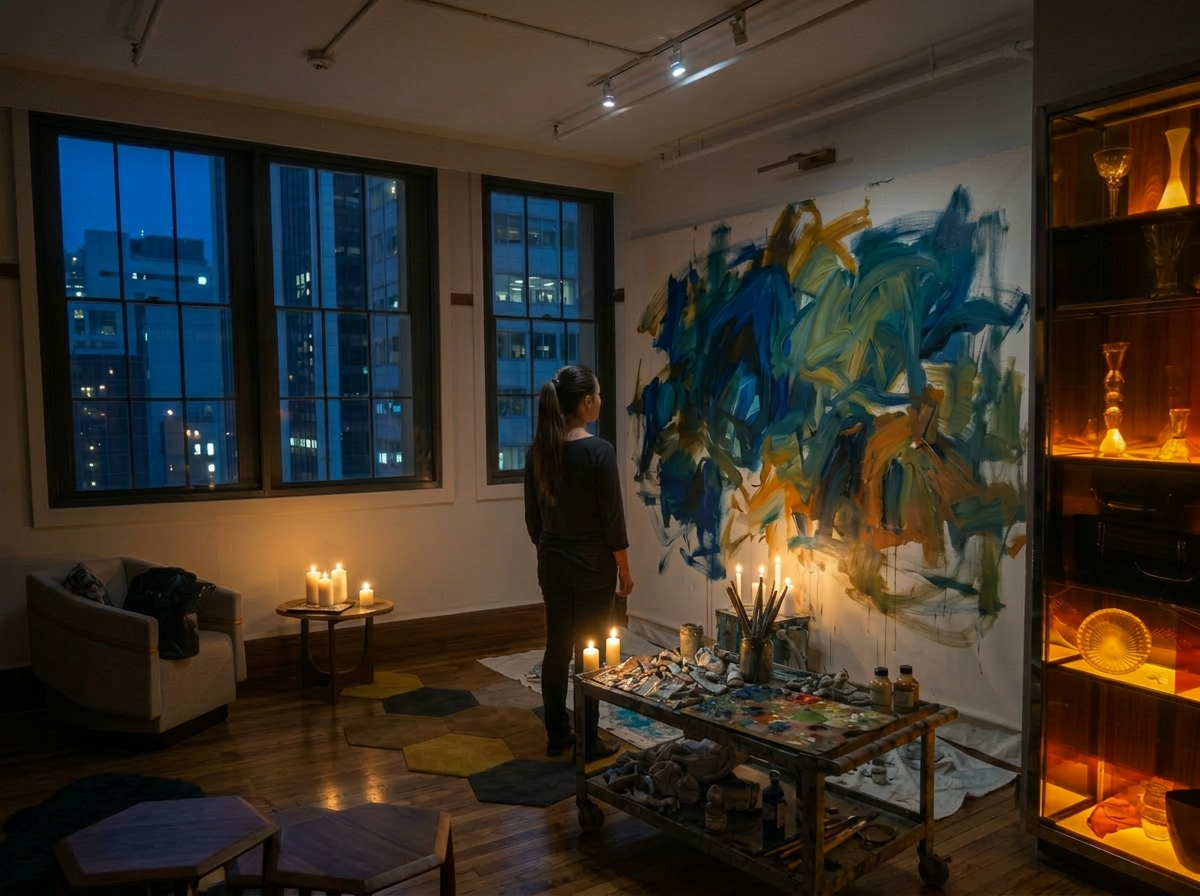
Room Four: The Canvas Between. A large blank canvas mounted vertically between them, paint and brushes on both sides. They paint simultaneously without seeing what the other creates, their hands occasionally touching through the canvas. When finished, they walk around to see the other side—two paintings that share the same surface, forever connected.
Room Five: The Kaleidoscope. A wall with mandala images turning on cycle. Softness under feet and soft pads that make musical tones. As the kaleidoscope turns, the lighting shifts, and music resonates as they walk. The steps startle and surprise. They don’t advance to the next room until they both find the right notes and develop a beautiful harmony.
Room Six: The Soak Room. A large sunken bathing space where two people submerge together in warm water with floating petals and glowing particles. They face each other across the water, moving through phases: invitation, floating in silence, bodies touching gently underwater, questions of truth or dare and discovery. The intimacy is thermal exchange, bodies are porous, and the water’s warmth relaxes a nervous energy.
Room Seven: The Tasting Table. A small table set with seven unmarked dishes filled with flavor and beautifully presented—sweet, sour, bitter, umami, salt, spice, smoke. They take turns sampling, one bite at a time, describing flavors and memories each taste evokes. Nourishment becomes intimacy; the mouth learns to trust before the mind does.
The Exit. A small anvil, hammer, and wooden box. Together they destroy their keys—bending, breaking, smashing brass into fragments. They drop the pieces into the box and leave through separate doors. They will never return. They may never see each other again.
The revelation arrives slowly for you, the Matchmaker: connection is best found in spaces that activate it. You didn’t create love. You built rooms where vulnerability became inevitable, where strangers had permission to be seen. Over years, you receive letters from people who met once, were changed permanently, and never forgot the person they encountered in your designed intimacy. You become a collector of transformed moments, proof that consciousness between two people can be orchestrated into being through intentional space, careful matching, and the knowledge that some meetings are meant to be singular, unrepeatable, and holy.

