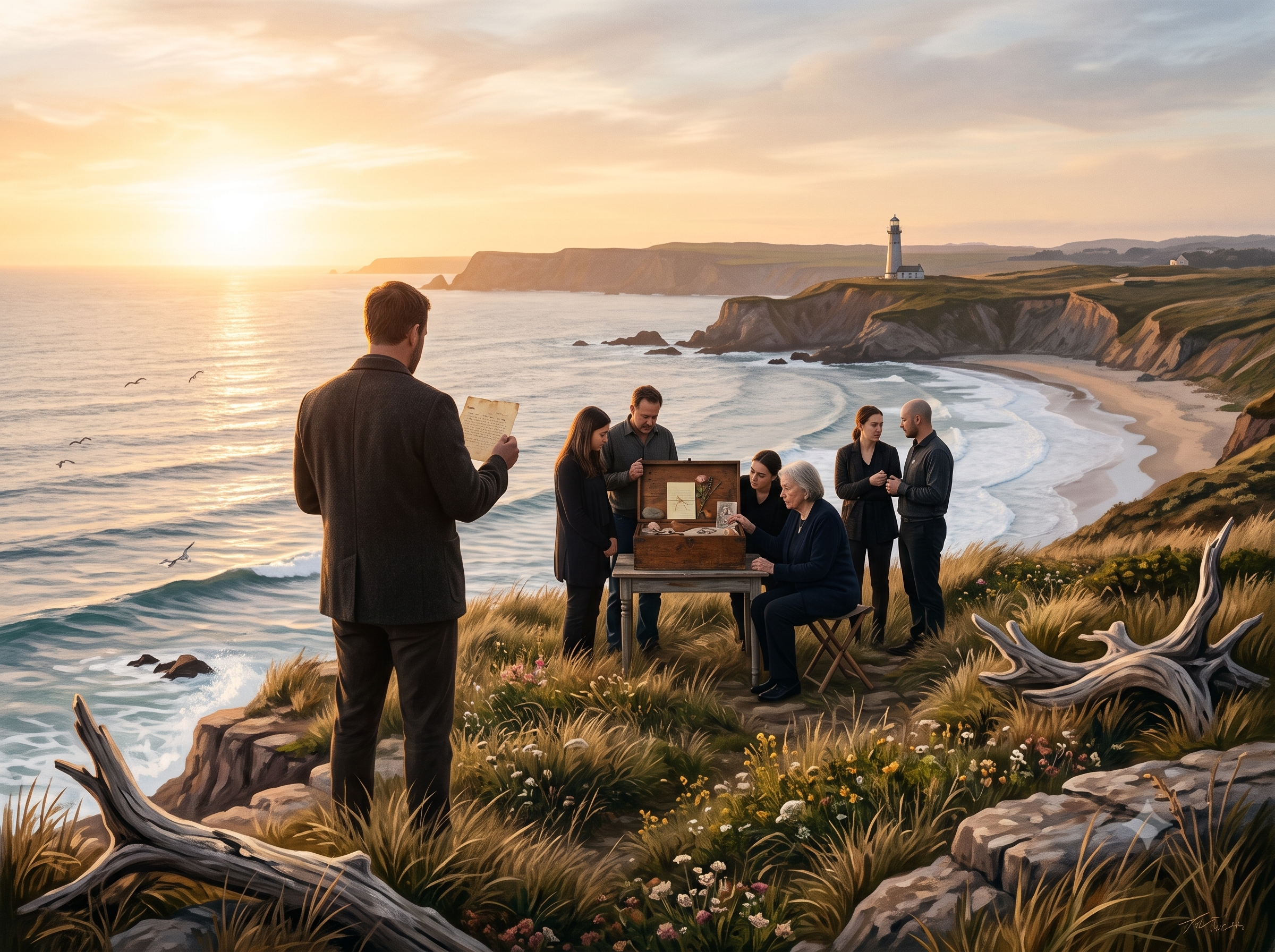
On your twentieth birthday, you begin the practice that will define the rest of your life. You acquire a beautiful wooden chest—large enough to hold a life’s worth of meaning, small enough that you must choose carefully what enters it. The rule is simple and absolute: Once per year, on your birthday, you place one object inside that represents what mattered most that year. Only one. Not what you accomplished or acquired, but what made you feel most alive, most human, most connected to the truth of your existence.
Some years the choice is obvious. The year your daughter is born, you place a hospital bracelet inside. The year your father dies, you add the watch he wore every day of your adult life. The year you finally leave the job that was killing you, you include the resignation letter you were too afraid to write for a decade. But other years require days of contemplation. What mattered most? The conversation that changed everything, or the quiet morning you realized you were happy? The trip that expanded your world, or the evening you stayed home and felt completely at peace? You learn that choosing what matters is itself a practice of wisdom—it forces you to know yourself, to admit what moves you, to stop lying about your priorities.
The objects accumulate slowly. A seashell from the beach where you scattered your mother’s ashes. A key to the first home you bought. A letter from a friend who saved your life without knowing it. A ticket stub from the concert where you understood what joy felt like. A photograph of a stranger who smiled at you on the worst day of your life. A stone from the mountain you climbed when you needed to prove you were still capable of hard things. Each object is small, but together they become an archive of significance—a curated collection of what you chose to remember if you could only remember one thing.
Every decade, on the decade anniversary of beginning this practice, you hold a private ceremony. You open the chest and remove every object, laying them out in chronological order on the floor of your home. You invite no one—this is between you and your life. You sit with these objects for hours remembering the years they represent, the person you were when you chose them, the reasons they mattered then and whether they still matter now. Some objects surprise you with their enduring power. Others feel distant, like relics from someone else’s life.
By the time you’re seventy, the chest holds fifty objects. Fifty years of choosing. Fifty answers to the question: What matters? You’ve spent five decades practicing discernment, learning to distinguish between what glitters and what glows, between what impresses others and what sustains you, between what you thought you wanted and what actually made you whole. The chest has become a map of your interior life—not the life you performed for the world, but the one you lived in private, in moments of clarity, in the spaces between ambition and surrender.
In your final years, you prepare for the last act of the experiment. You write letters to the people you love—your children, your partner, your closest friends—and you tell them the story of each object in the chest. Not just what it is, but why it mattered, what it meant, what it taught you about being alive. These letters become your ethical will, your transmission of wisdom, your answer to the question every generation asks: What did you learn? What should we keep? What matters enough to carry forward?
When you die, the chest is opened at your memorial. The fifty objects are displayed, and some of your best letters are read aloud. Your loved ones see, perhaps for the first time, the architecture of your inner life—the moments you treasured, the losses you honored, the joys you chose to remember. They understand that you spent your entire adult life practicing the art of mattering, of choosing what to hold and what to release, of building a life not around everything you accumulated but around the few things that made existence feel sacred.
After the reading, each person at your memorial is invited to take one object from the chest—not as inheritance, but as transmission. They take the seashell, the key, the letter, the ticket stub, the stone. They carry these objects into their own lives, and with them, they carry your practice of choosing, your commitment to knowing what matters, your refusal to let a life pass without marking its most meaningful moments. The chest empties. The objects scatter into the world. But the story remains—the annual ritual of pausing, reflecting, and placing one thing into a box that says: This is what made me human. This is what I choose to remember. This is everything that matters.

