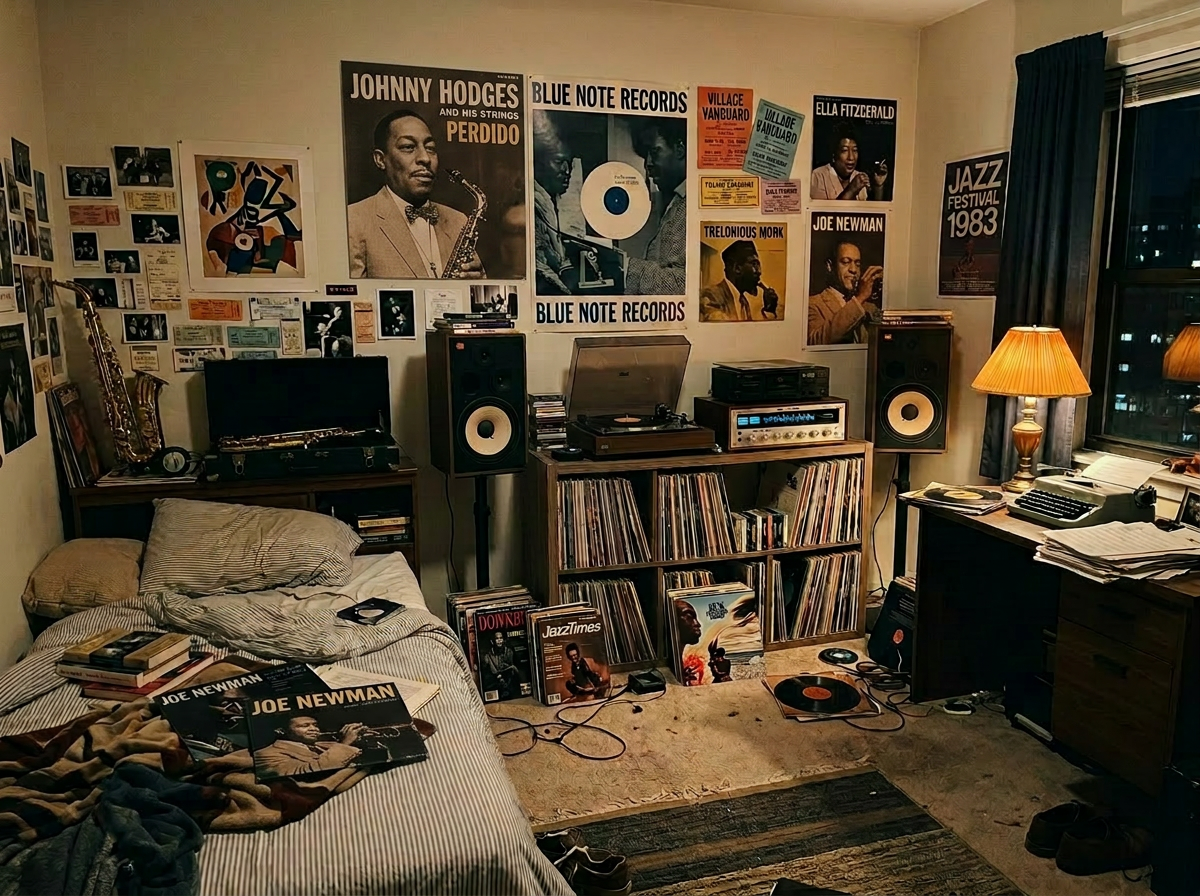
People unconsciously move on from who they used to be. They donate the clothes that no longer fit their body or their identity, repaint walls to match new tastes, replace furniture as styles evolve. Within years, the physical evidence of who you were dissolves. This practice asks the opposite: that you preserve rather than erase, that you document your own becoming across decades by freezing rooms in time.
Choose a house large enough to hold your transformations. Every ten years—or at major life transitions—you freeze one room exactly as it is. At thirty, you preserve your bedroom: the books stacked beside your bed, the clothes hanging in your closet, the posters on your walls, the desk cluttered with ambitions you haven’t yet abandoned. You photograph it, catalog it, then close the door. That room becomes a time capsule of who you were at thirty—your priorities made visible through objects, your aesthetic frozen in arrangement.
At forty, you freeze another room. By now, everything has changed. The books are different—more serious, or more escapist, or abandoned entirely for podcasts. The clothes reflect a different body, a different income, a different understanding of who you want to be seen as. The art on the walls has shifted from rebellion to comfort, or from minimalism to abundance. You close this door too. Now your house holds two versions of you, separated by a decade and a doorway.
At fifty, you freeze a third room. The objects here tell a story your younger selves couldn’t have predicted: evidence of parenthood, or divorce, or career reinvention, or loss. The room holds what mattered when you were fifty—not what you thought would matter at thirty, but what actually survived the years. You walk between these three rooms and see the arc of your transformation. The thirty-year-old’s idealism. The forty-year-old’s compromise. The fifty-year-old’s hard-won clarity.
By seventy, you’ve frozen six rooms. Walking through your own house is walking through your autobiography. You see the evolution of taste, priority, identity. You see what you’ve kept and what you’ve released. You see the books you thought would change your life gathering dust in your forty-year-old room, replaced by entirely different obsessions a decade later. You see the person you were trying to become at thirty, and you see how far you drifted—or how close you stayed—to that vision.
The house becomes a museum of one life’s journey. Each room is evidence that you were never static. The rooms are monuments to your willingness to evolve, evidence that you were brave enough to let yourself be different people across a single lifetime.
When you die, your descendants inherit not just a house but a map of a human life—the visible trajectory of how one person moved through time, what they valued at each stage, how they grew and contracted and grew again. Your children walk through these rooms and meet versions of you they never knew. The rooms answer questions you could never articulate in conversation. They see that a life is not a straight line but a series of rooms, each one complete and partial, each one true for its moment, all of them together forming something larger than any single version could contain.

