Most families discard what the dead leave behind. Closets are emptied, rooms repainted, possessions donated or sold. Within months, the physical evidence of a life dissolves. This practice asks the opposite: that you preserve rather than erase, that you let the dead remain visible in the architecture of your home.
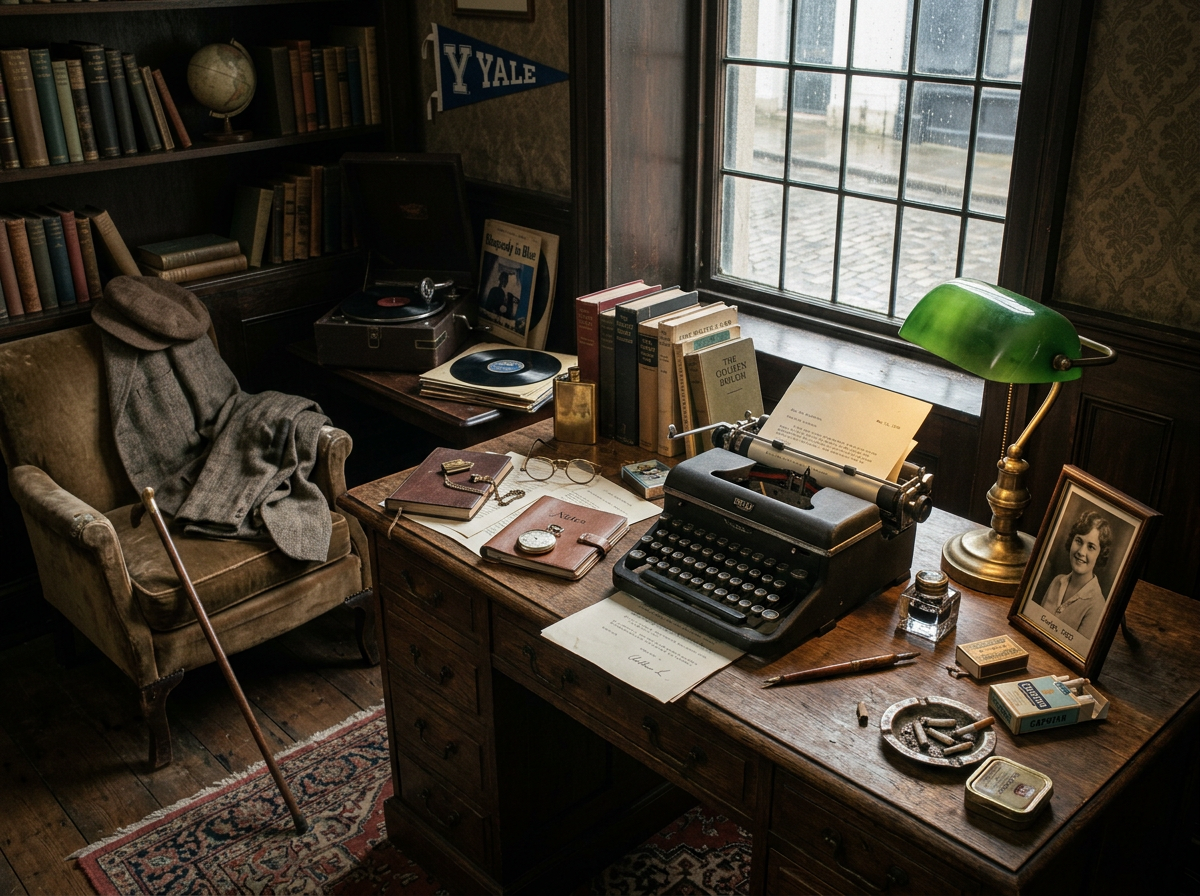
Choose one house—a family home passed down across generations—and commit to freezing rooms in time. When someone who lived there dies or moves into their final chapter of life, their room is left exactly as it was. The books on the shelf remain in the order they arranged them. The jacket still hangs on the chair. The photographs they chose to display stay on the dresser. The handwriting on the calendar marking appointments they’ll never keep. Nothing is moved. Nothing is discarded. The room becomes a time capsule, a portrait of a person rendered in objects and arrangements.
Your grandmother’s bedroom remains untouched for thirty years. Her reading glasses rest on the nightstand beside a novel she never finished. The floral wallpaper she chose in 1987 fades gently. Her perfume bottles—some empty, some still holding fragrance—line the vanity. When you enter this room as a child, you’re meeting her. Not through stories or photographs, but through the intimate evidence of how she lived: what she read, what she wore, what she kept close.
Your grandfather’s study is preserved the same way. His desk holds the fountain pen he used to write letters, the tobacco pipe he smoked while thinking, the maps he marked with places he dreamed of visiting. The room smells faintly of leather and old paper. You sit in his chair and feel the weight of his presence—not as a ghost, but as a personality made tangible through the objects he touched daily.
As generations pass, the house accumulates these frozen rooms. Your great-aunt’s sewing room with its half-finished quilts. Your uncle’s garage workshop with tools arranged precisely on pegboard. Your father’s office with his collection of vinyl records and the typewriter he used before computers. Each room is a museum exhibit, but the museum is your home. You grow up walking through time, moving between decades with every doorway.
The living spaces remain alive—kitchen, living room, bathrooms—but the frozen rooms are sacred. You don’t repurpose them. You don’t modernize them. You let them age naturally, dust accumulating like snow, light fading the curtains, the air growing still. These rooms aren’t morbid—they’re intimate. They teach you that people are more than memories. They’re the books they chose, the clothes they loved, the small objects they kept on their desk for reasons only they understood.
When you bring your children into these rooms, you’re introducing them to ancestors they never met. “This was your great-grandmother’s room. See how she arranged her jewelry? See the postcards she saved?” The room answers questions no photograph can. It shows you not just what someone looked like, but how they lived, what mattered to them, the texture of their daily existence.
This practice requires commitment. It means living in a house where some doors open into the past. It means resisting the urge to reclaim space, to modernize, to erase. It means accepting that your home is also a shrine, that the dead deserve to remain visible, that legacy is built not through stories alone but through the preservation of intimate, ordinary evidence.
By the time you’re old, the house holds five generations. Walking through it is walking through your lineage—each room a different decade, a different personality, a different way of being human. You understand that you, too, will one day occupy a frozen room. That your grandchildren will enter and meet you through the objects you touched, the books you read, the life you arranged around yourself.
The house teaches you this: that love doesn’t end when someone dies. It continues in the care you take to preserve what they left behind, in the refusal to let them disappear completely, in the willingness to live among the dead as if they’re still speaking.
 Life Arts Laboratory