Memory doesn’t belong to one person. It accumulates in places like sediment, layer upon layer, until a street corner holds a thousand moments that happened in the same square meter of earth. This experiment makes that visible.
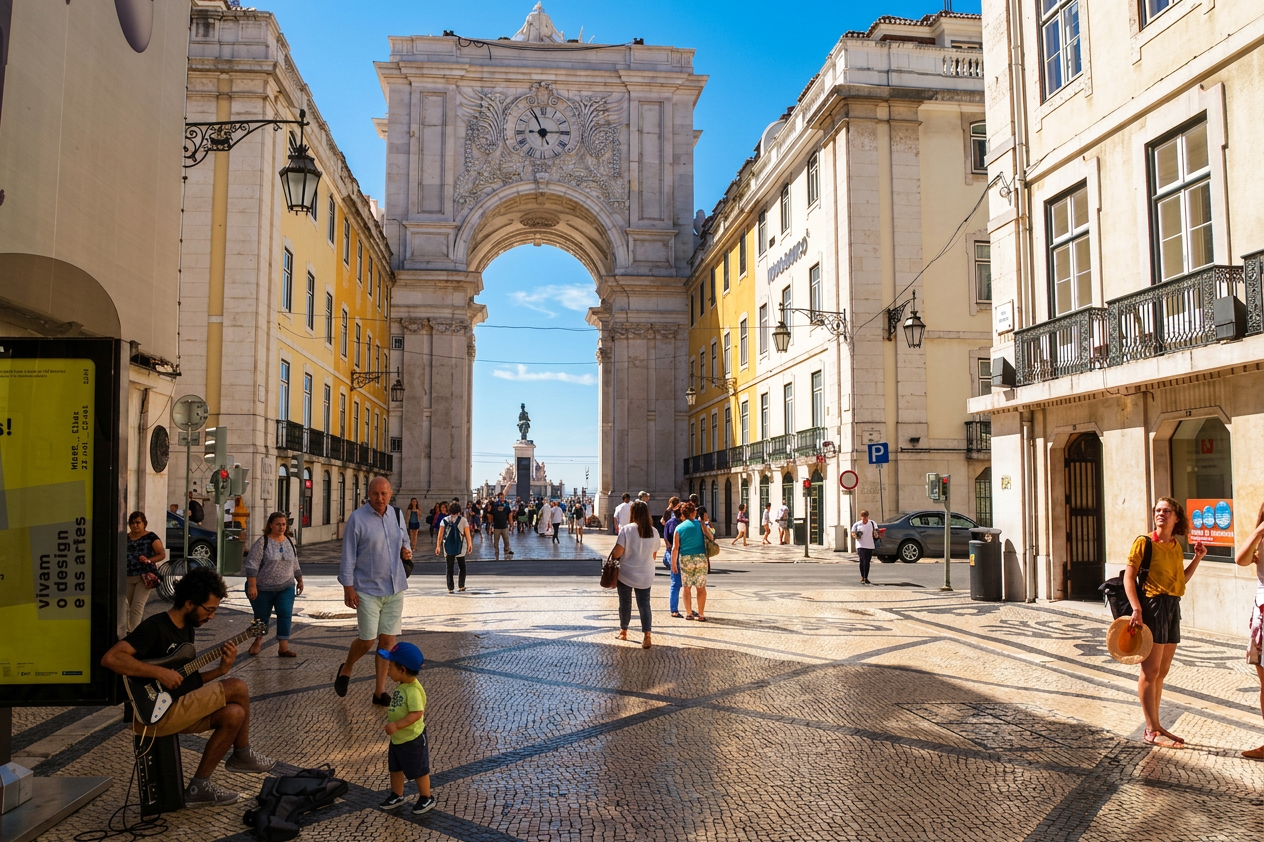
The original traveler begins in Lisbon, wearing AR glasses that record spatial memories—geolocated moments tagged to exact coordinates. A sunset from Miradouro de Santa Catarina. The sound of fado bleeding through an alley door. The taste of pastel de nata still warm from the oven. Each memory is captured, archived, and added to an app called The Memory Keeper.
The route continues: Lyon’s traboules and riverside markets, the Swiss Alps where silence has texture, Copenhagen’s bicycles and brutalist beauty, finally Rome where every stone has outlived empires. Five weeks. Five cities. Dozens of memories pinned to the map like stars.
Then the cycle begins.
New travelers follow the same route, also wearing AR glasses connected to the Memory Keeper app. When they pass a memory point—a café table, a mountain overlook, a bridge at dusk—an alert pulses in their vision. They can access what others felt standing exactly where they stand now. A stranger’s voice describing the light. Another traveler’s video of rain on cobblestones. Someone’s whispered confession recorded at 3 a.m. in an empty piazza.
The Memory Keeper shows you who left each recording: Elena, March 2023, “The day I decided to stay.” Marcus, October 2024, “First trip after the divorce.” These aren’t anonymous ghosts—they’re people with names, with timelines, with reasons for being exactly where you’re standing. You feel their presence like a hand on your shoulder. And as you continue on your journey you can add your own memory to the archive deepening the well of experience.
With each traveler, the Memory Keeper grows denser. What begins as a single thread becomes a tapestry. That corner in Lyon where the original traveler watched a street musician now holds twenty memories—proposals, breakdowns, moments of sudden clarity, a child’s laughter, someone crying after a phone call they’ll never forget. The most visited memories rise to the surface of the interface, glowing brighter, easier to find. The app learns what matters. Certain spots become wells of collective resonance—places where something about the light or the silence or the architecture makes people stop and record what they can’t keep to themselves.
The pilgrimage becomes communal. You’re never alone because the ghosts of previous travelers walk beside you, their memories flickering into view with a gesture. You see the same sunset they saw, but also how they saw it—what it meant to them, what they were running from or toward.
By the time you reach Rome, the Colosseum isn’t just ancient history. It’s layered with the intimate present of everyone who stood there before you, their private revelations now part of the architecture, each one a different language of recognition.
Memory stops being singular. It becomes choral.
You learn that places don’t just hold history—they hold us. That strangers’ memories can feel like your own when you stand in the same light. That the past isn’t behind you, it’s beneath you, and with the right tools, you can reach down and touch it. That you can speak to people you’ll never meet and they’ll speak back, building cathedrals of shared experience one recording at a time.
The pilgrimage never ends. It just deepens. And every traveler who follows becomes both witness and author of a story that belongs to everyone.
 Life Arts Laboratory