Imagine walking into a room where the best minds across two thousand years have left notes just for you. For millennia, people have wrestled with the same questions you carry—how to live well, how to love deeply, how to face mortality, how to find meaning in chaos. You’re going to spend twelve months reading backwards through time, one book per century, starting with the 2000s and ending in antiquity. By December, you’ll have traveled through twelve centuries of human wisdom, discovering that the questions change less than you’d think, but the answers grow stranger and more beautiful the further back you go.
January: 2000s – The Year of Magical Thinking by Joan Didion (2005). You begin with grief made visible. Didion writes about the year after her husband’s sudden death with surgical precision and devastating honesty. The prose is clean and unflinching. You learn that contemporary wisdom often means stripping away comfort, that magical thinking is how we survive the unsurvivable, and that clarity doesn’t make pain smaller—it just makes it more bearable to witness.
February: 1900s – Man’s Search for Meaning by Viktor Frankl (1946). Frankl survived Auschwitz by finding meaning even in suffering. His central insight—that we cannot avoid suffering, but we can choose how to cope with it—becomes a lens through which you see everything differently. You learn that the 20th century’s great contribution was understanding that meaning isn’t given; it’s created through how we respond to what happens to us.
March: 1800s – Walden by Henry David Thoreau (1854). Thoreau spent two years living deliberately in a cabin by a pond, stripping life down to its essentials. His prose is dense with observation—ice forming, beans growing, the sound of a distant train. You learn that the 19th century understood something we’ve forgotten: that simplicity requires discipline, that solitude is different from loneliness, and that most of what we think we need is just noise.
April: 1700s – Discourse on Inequality by Jean-Jacques Rousseau (1755). Rousseau asked the question no one was supposed to ask: what if civilization itself created inequality? He traced how humans moved from natural freedom to chains of property and power, arguing that society’s foundations were built on lies we told ourselves. His radical questioning of authority and systems became the philosophical blueprint for the French Revolution. You learn that the 18th century discovered something dangerous: that accepted systems aren’t inevitable—they’re constructed—and that questioning power itself is an act of liberation.
May: 1600s – Essays by Michel de Montaigne (1580). Montaigne invented the personal essay by asking, “What do I know?” and then exploring everything—friendship, death, cannibals, thumbs. His writing is digressive, honest, and deeply human. You learn that the Renaissance taught us to question everything, that self-examination is a form of philosophy, and that admitting uncertainty is its own kind of wisdom.
June: 1500s – The Interior Castle by Teresa of Ávila (1577). Teresa describes the soul as a castle with seven chambers, each one bringing you closer to union with the divine. Her mystical visions are grounded in practical advice about prayer and contemplation. You learn that the 16th century understood ecstasy as a discipline, that spiritual experience requires practice, and that the divine isn’t distant—it’s interior.
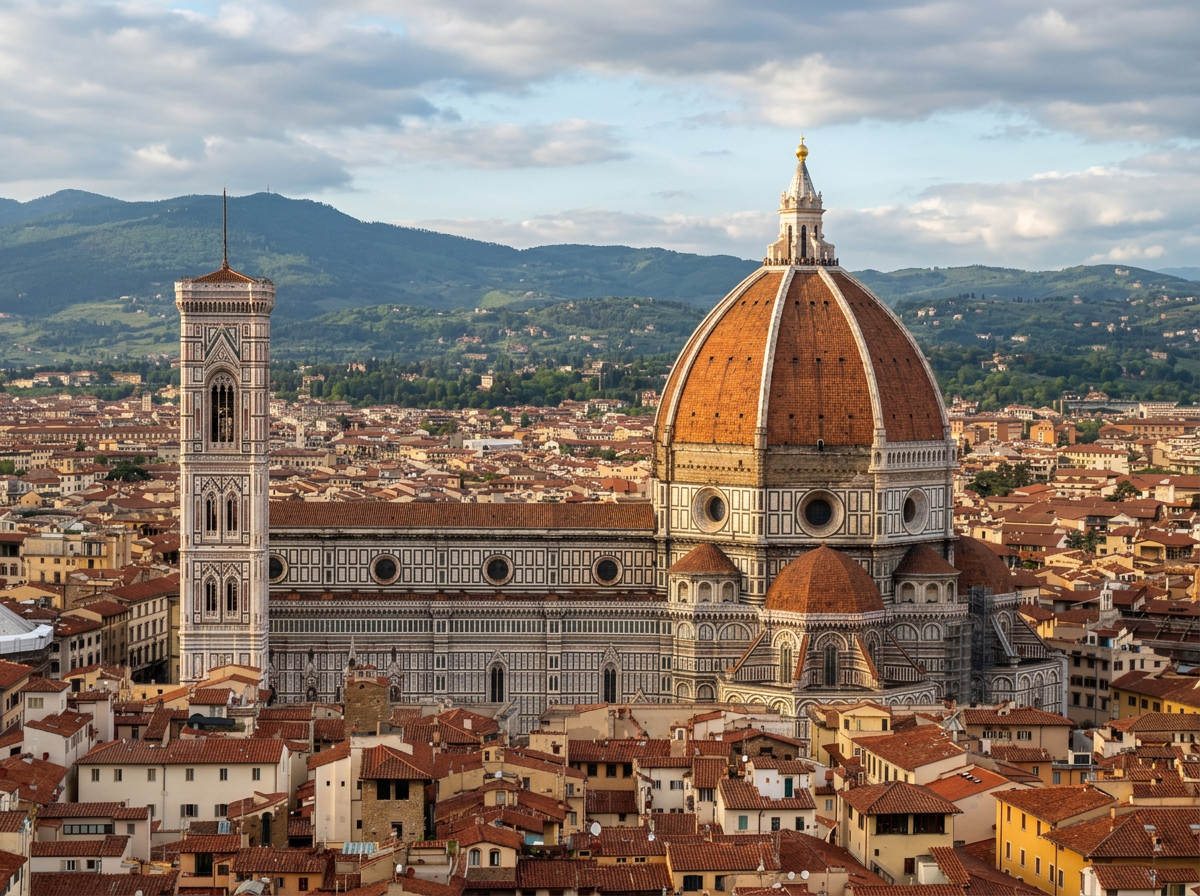
July: 1400s – The Golden Mean by Marsilio Ficino (1469). A Florentine philosopher synthesizes Plato with Christian thought, arguing that harmony and balance are the keys to a good life. Ficino writes about love as a cosmic force, about beauty as a path to truth, and about the integration of reason and emotion. You learn that the Renaissance valued wholeness—that wisdom isn’t about choosing between the spiritual and the physical, but understanding them as one. The text teaches you that the pursuit of beauty and truth are inseparable.
August: 1300s – The Divine Comedy by Dante Alighieri (1320). Dante journeys through Hell, Purgatory, and Paradise, guided by Virgil and Beatrice. The allegory is dense, the imagery unforgettable—sinners frozen in ice, souls climbing mountains of purification, the celestial rose of heaven. You learn that the medieval mind saw life as a pilgrimage, that suffering has structure, and that love (Beatrice) is what ultimately guides us toward transcendence.
September: 1200s – The Conference of the Birds by Farid ud-Din Attar (1177). In this Sufi allegory, thousands of birds journey to find their king, the Simorgh. Most die or turn back. The thirty who reach the mountain discover that they are the Simorgh—the divine was within them all along. You learn that Persian mysticism understood the journey as the destination, that seeking God means discovering yourself, and that wisdom is often a mirror.
October: 1100s – The Autobiography by Avicenna (Ibn Sina) (written ~1030s, widely circulated in 1100s). Avicenna was a polymath—physician, philosopher, scientist. His autobiography is brief but reveals a mind obsessed with understanding everything. You learn that the Islamic Golden Age valued knowledge as devotion, that curiosity is a form of worship, and that wisdom means integrating science, philosophy, and spirituality rather than separating them.
November: 1000s – The Pillow Book by Sei Shōnagon (circa 1002). Sei Shōnagon was a court lady in Heian Japan who kept lists of beautiful things, annoying things, elegant things. Her observations are sharp, aesthetic, and deeply personal. You learn that the 11th century Japanese understood that attention itself is an art form, that beauty is found in specificity, and that wisdom can be as simple as noticing what pleases you.
December: Ancient World – Meditations by Marcus Aurelius (170-180 CE). A Roman emperor wrote private notes to himself—fragments of thought on virtue, mortality, duty, and the nature of the mind. The text is spare and direct, written not for publication but for personal clarity. Marcus Aurelius grapples with the same struggles that define human life: wasted time, difficult people, the inevitability of death, the search for meaning. You learn that Stoic philosophy understood that you cannot control external events, only your response to them, that worry about the future is a waste of the present moment, and that wisdom has always been about distinguishing between what is in your power and what is not.
By the end of the year, you’ve learned that reading backwards through time reveals something forwards reading obscures: wisdom doesn’t progress—it circles. The ancients weren’t less sophisticated; they were differently sophisticated. The moderns aren’t more enlightened; they’re differently confused. Every era discovers something essential and forgets something else. You come away humbled, knowing that the questions you carry have been carried by billions before you, and that the answers you find are just one more voice in an eternal conversation. You’ve proven that wisdom isn’t about finding the right answer—it’s about learning to ask better questions, and recognizing that every century, every culture, every thinker is just another attempt to make sense of the same beautiful, terrible mystery of being human.
 Life Arts Laboratory